


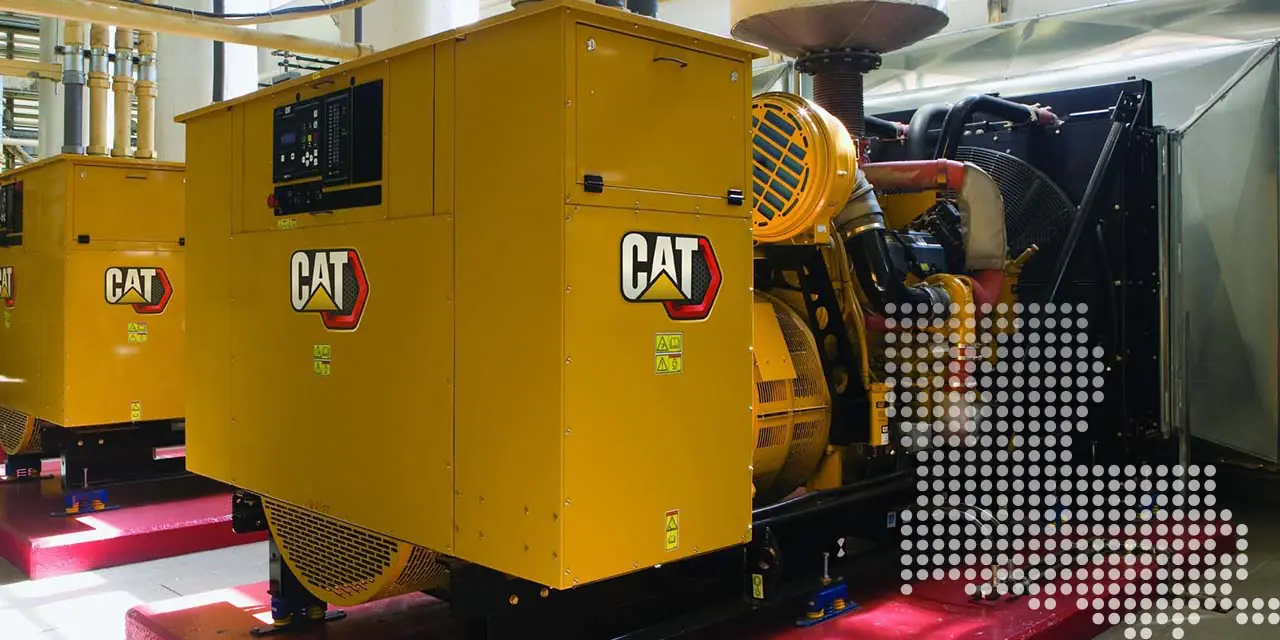
Louisiana often ranks among the highest in the country for electricity consumption per household, and the state is no stranger to extended power outages. That combination makes generator sizing a decision with serious consequences. The right size generator keeps your home or business running when the grid goes down.
Work through the calculation below, and you’ll have a better idea of what capacity your property needs.
Learning how to size a generator begins with a multistep decision-making process. Capacity calculation, scope, fuel type and installation all factor into which generator is right for a specific property.
Every appliance on your load list has a running watt (W) and a starting W value. Your generator must handle both. Running watts measure the continuous power an appliance draws while operating. Starting watts measure the surge of power a motor-driven appliance requires to start, typically two to four times the running draw. The surge lasts only a few seconds, but a generator sized to handle it handles the load without interruption.
Surge requirements vary by appliance type. Resistive loads like LED lights, incandescent bulbs, and electric heaters draw the same power at startup as they do while running. Motor-driven appliances are a different story. Refrigerators, central air conditioning units, sump pumps, well pumps and furnace blowers all have significant starting demands that you must factor into your calculations.
Knowing how to size a generator for a house starts with this three-step formula:
Consider a typical home. Keeping essential appliances like a refrigerator, furnace blower, sump pump and basic lighting operational can require a notable amount of power. When you account for the extra power needed to start motors and a recommended safety reserve, an essential-circuit setup might require a generator of substantial capacity.
The 20% buffer protects the generator from continuously operating at peak capacity, extending equipment life and preventing overload trips during demand spikes.
Choosing between essential and whole-house backup systems depends on your property’s specific needs:
If you’re still weighing generator type alongside scope, review standby vs. portable generator options before finalizing your load list.
Louisiana’s high electricity consumption means accurate whole-home sizing is especially important for residents in this state. For commercial and industrial operations, whole-facility coverage often involves paralleling multiple generator sets and switchgear. That level of complexity requires a project-level load analysis.
Diesel and natural gas are the two primary fuel options for standby and prime power applications. A diesel generator set stores fuel on-site and is well-suited to remote sites where gas infrastructure has limited reach.
Natural gas generator sets connect directly to underground pipelines, eliminating on-site storage requirements. For Louisiana buyers, that distinction matters. Underground gas distribution infrastructure can offer greater resilience than overhead electric lines during hurricanes and other major storms, as it’s often better protected from the weather.
A natural gas generator set with a similar frame size often carries a somewhat lower kW rating than its diesel equivalent, so factor that into your capacity calculation.
A wattage calculation gets you close, but site-specific variables determine which generator size actually performs at your location. Three factors consistently affect final sizing decisions:

Check your appliance nameplate for exact values and be aware that wattage varies by efficiency rating, presence of a soft-starter and model year. For high-draw heating appliances, confirm your generator supports resistive heating loads before adding them to your calculation.
Central AC is the largest single load in most Louisiana homes and the primary driver of whole-home sizing decisions. For planning purposes, consider that a central air conditioning (AC) unit can draw substantial running power and experience a surge when the compressor starts up. It’s often advisable to base your load calculation around the central AC unit first.
Below are other everyday loads and their typical ranges, based on commonly cited industry average estimates. The exact numbers vary by model and soft starters.
| Appliance | Running Watts | Starting Watts |
| Central AC (3-ton) | Approximately 3,800 W | Typically ranges from 8,500-9,000 W |
| Window AC (10,000 British thermal units) | Approximately 900 W | Approximately 2,200 W |
| Refrigerator or freezer | Typically ranges from 100-400 W | Can draw up to 800-1,200 W |
| Ceiling fan | Approximately 75 W | Approximately 100 W |
| Electric water heater | Approximately 4,500 W | No surge |
| Desktop computer | Typically ranges from 100-400 W | No surge |
| Television | Typically ranges from 100-150 W | No surge |
| Microwave (1,000 W) | Approximately 1,000 W | No surge |
| 10 LED lights | Approximately 100 W | No surge |
 Get Expert Generator Sizing Support for Your Power Needs From Louisiana Cat
Running your generator at a load that’s too high for its capacity means you may not have the energy you need to power your essentials. Running it at a lower load than it’s rated for results in poor fuel efficiency and faster wear and tear. With an expert partner on your side, finding the right-sized generator for your home or business is easy. Louisiana Cat has been serving businesses and communities as an authorized Cat® dealer since 1933. Our team has extensive experience and deep regional expertise. We’ll walk you through Cat SpecSizer and match your load calculation to the right generator set.
Explore our generator sets online, and contact us to speak to an expert about getting the right home generator in Louisiana.